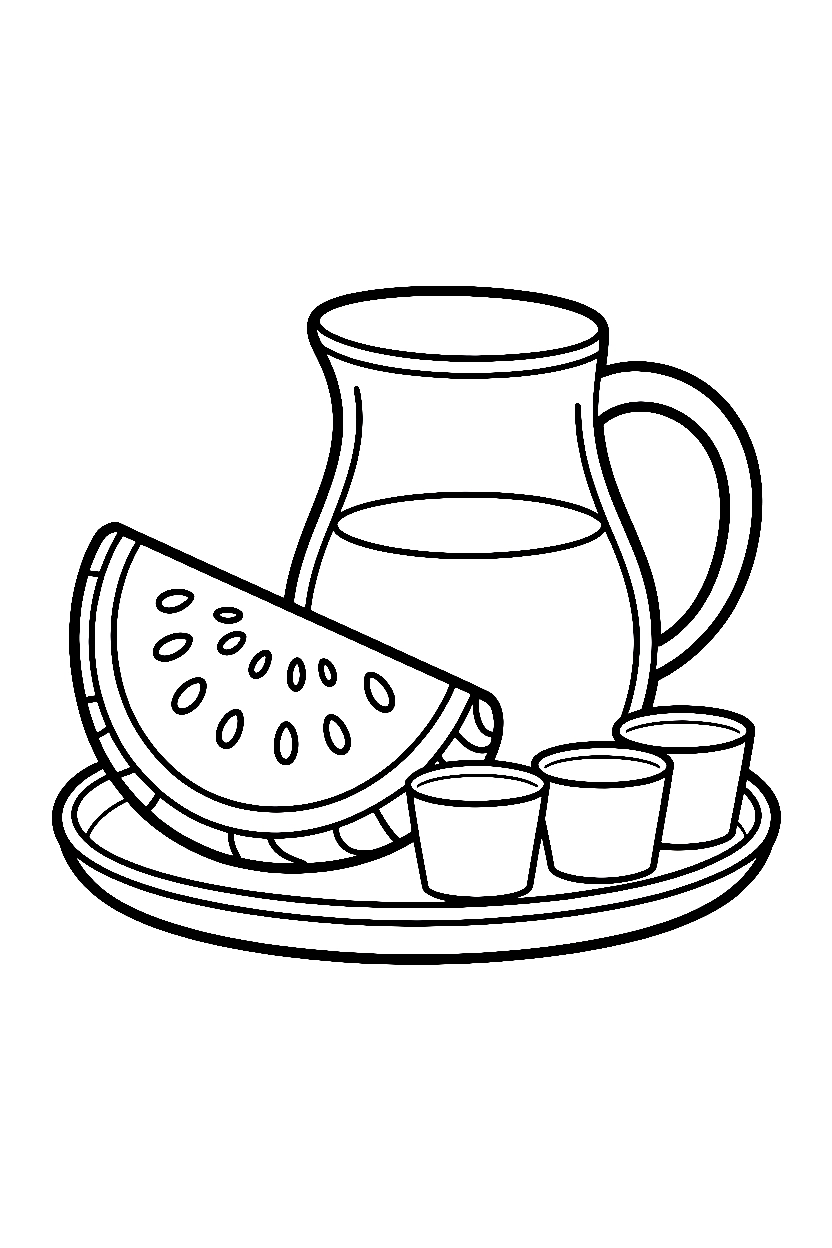
A wedge of watermelon sits beside a glass pitcher on a checked tablecloth, part of a scattered afternoon scene that includes Watermelon Coloring Pages waiting to be filled in.
The rind curves in thick bands. Seeds dot the center in loose clusters. A patterned napkin folds near the corner, and a small plate holds another slice. These images work well in a waiting room, giving children something tactile to focus on while time passes.
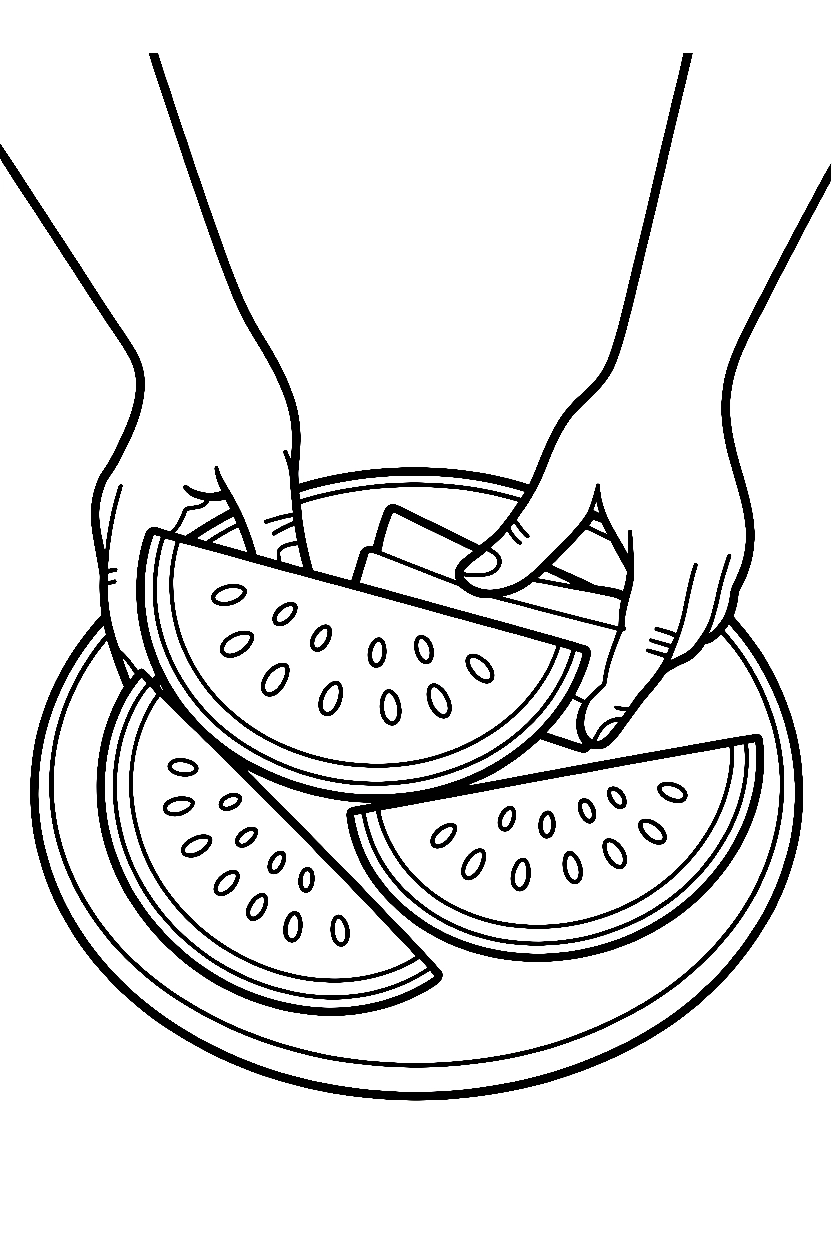
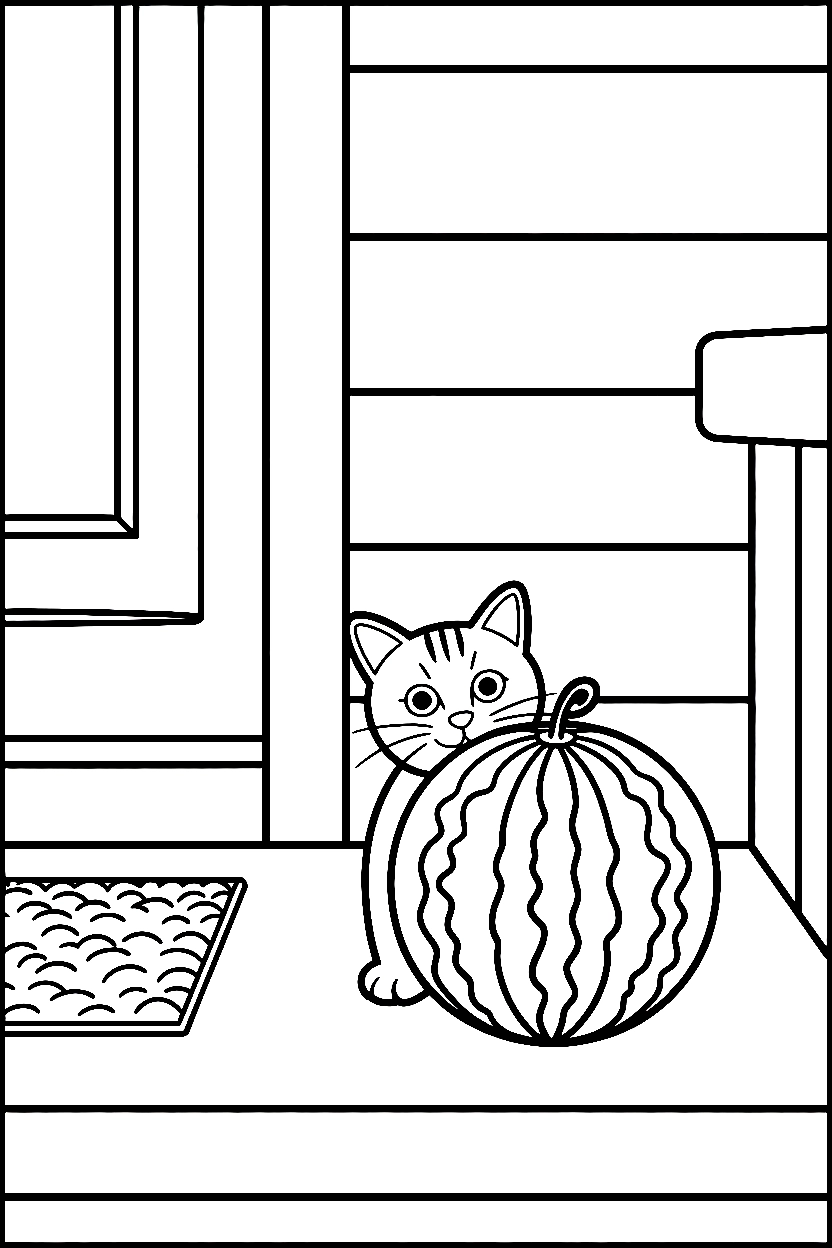
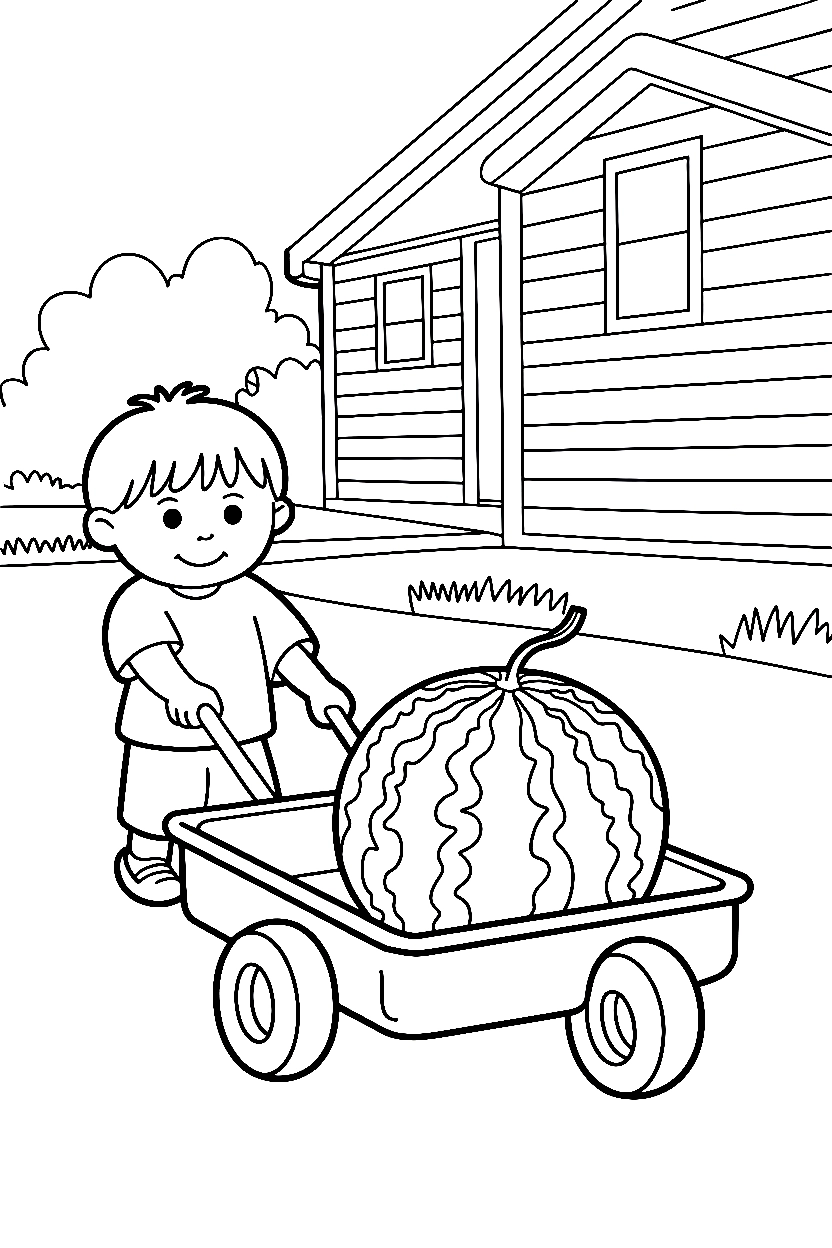
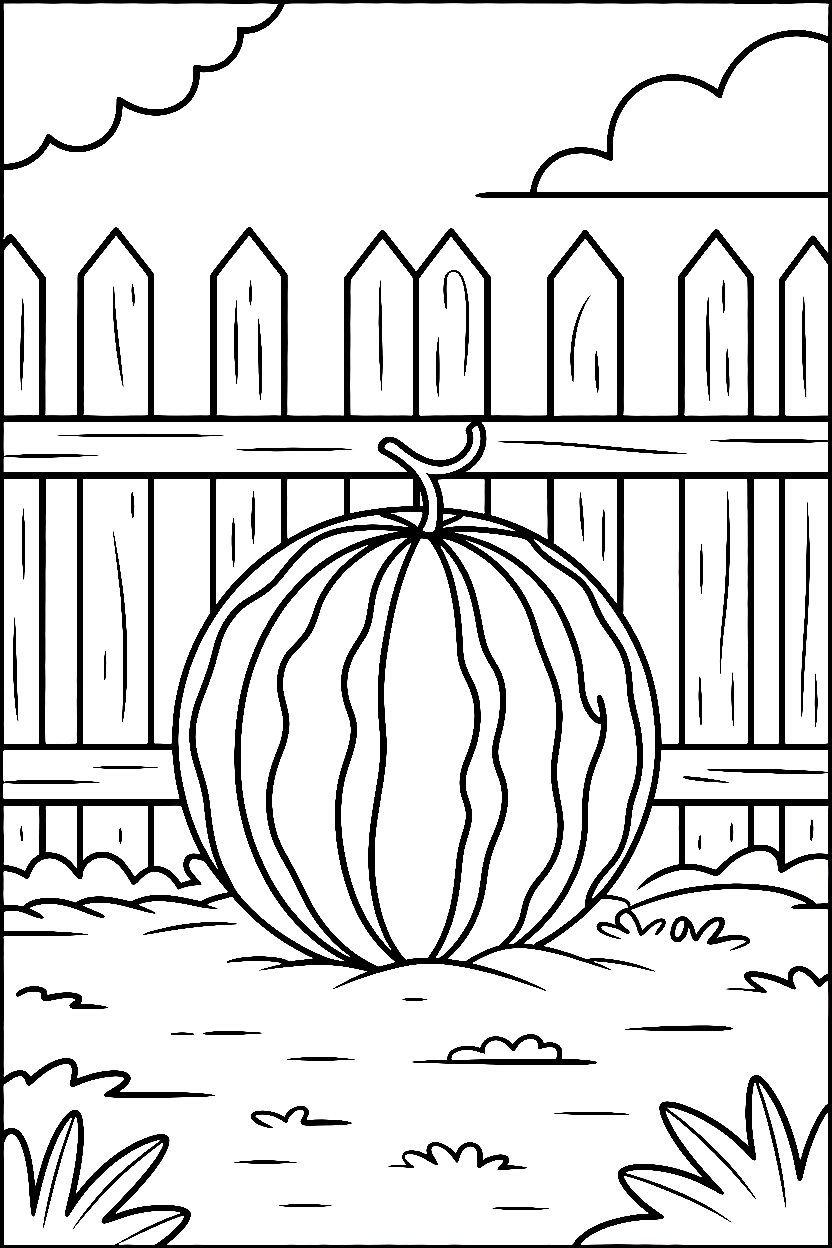
Each outline drawing shows the watermelon from a different angle. One page captures a whole melon sitting upright on grass. The stem curves slightly.
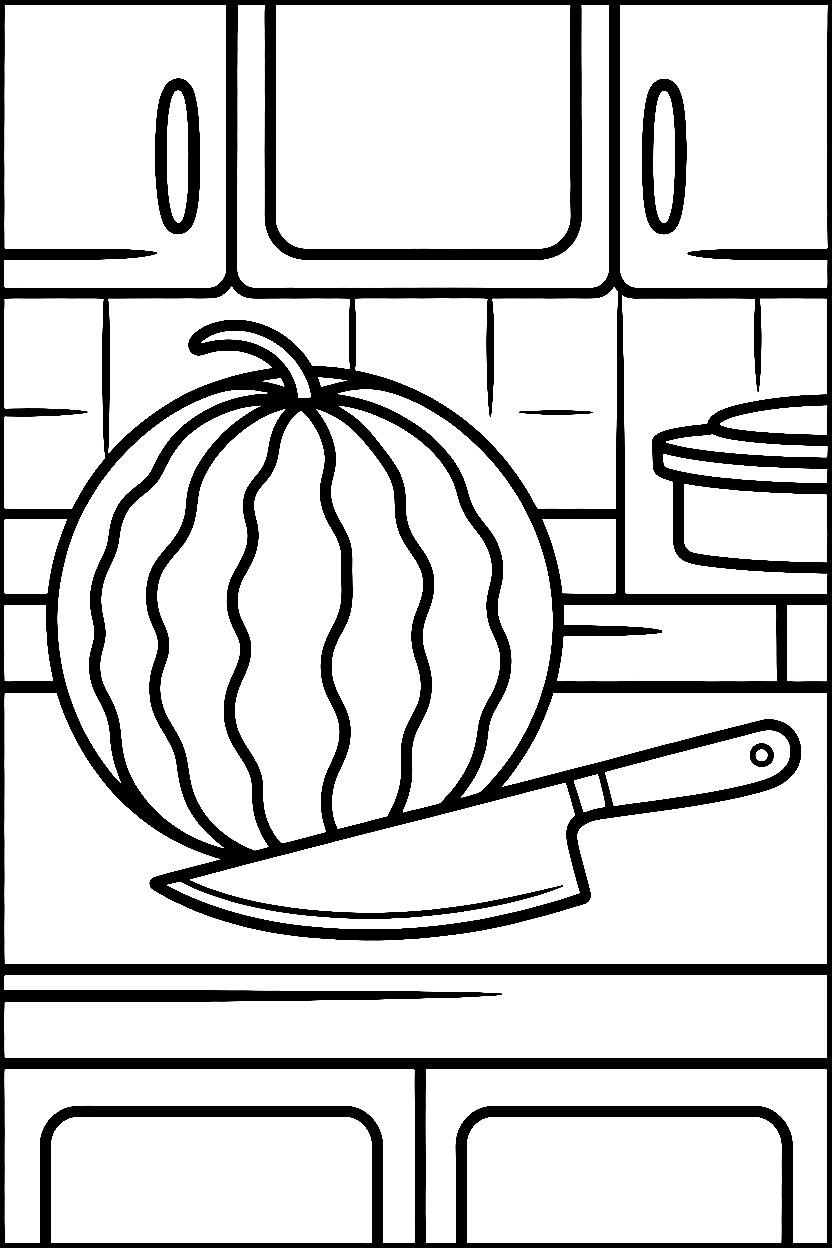
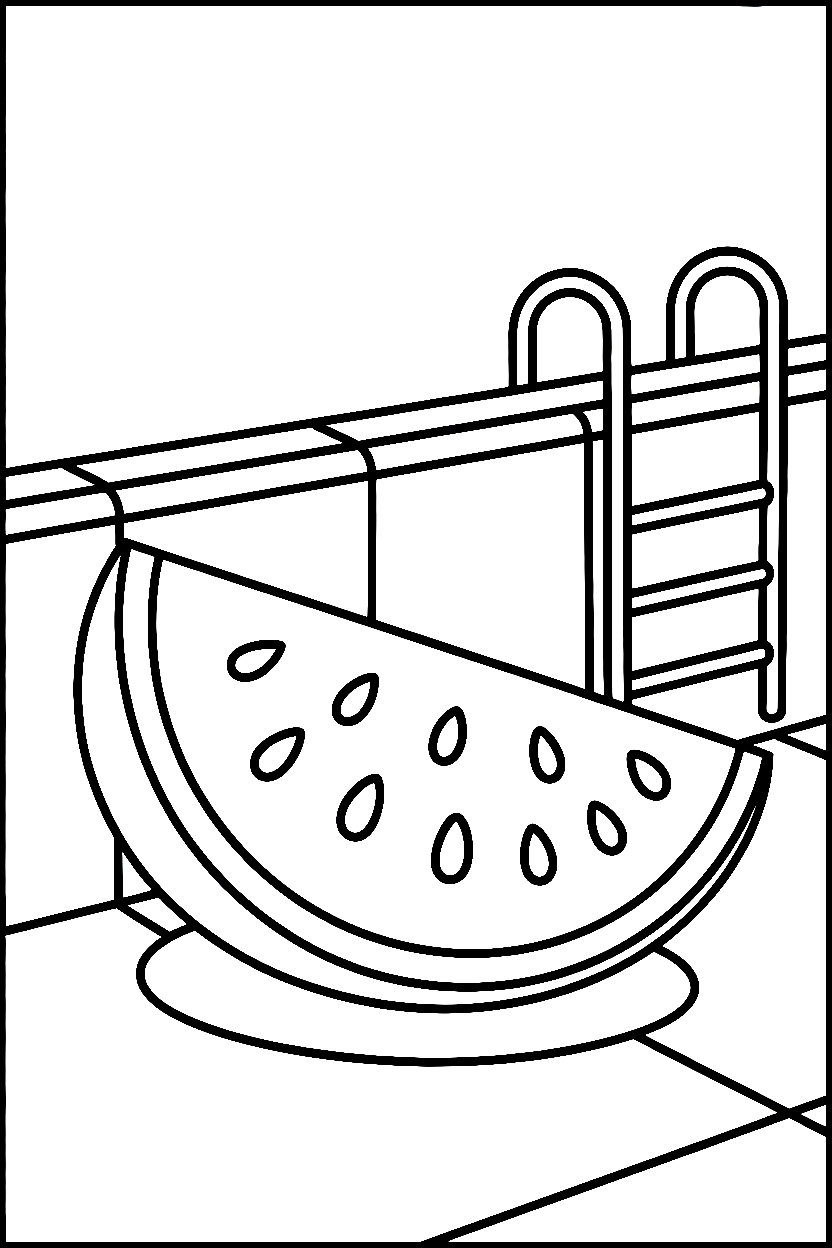
Another scene reveals a watermelon sliced down the middle, both halves facing outward. The interior texture appears in simple crosshatching. A third sheet places a single wedge on a wooden cutting board with a knife resting nearby.

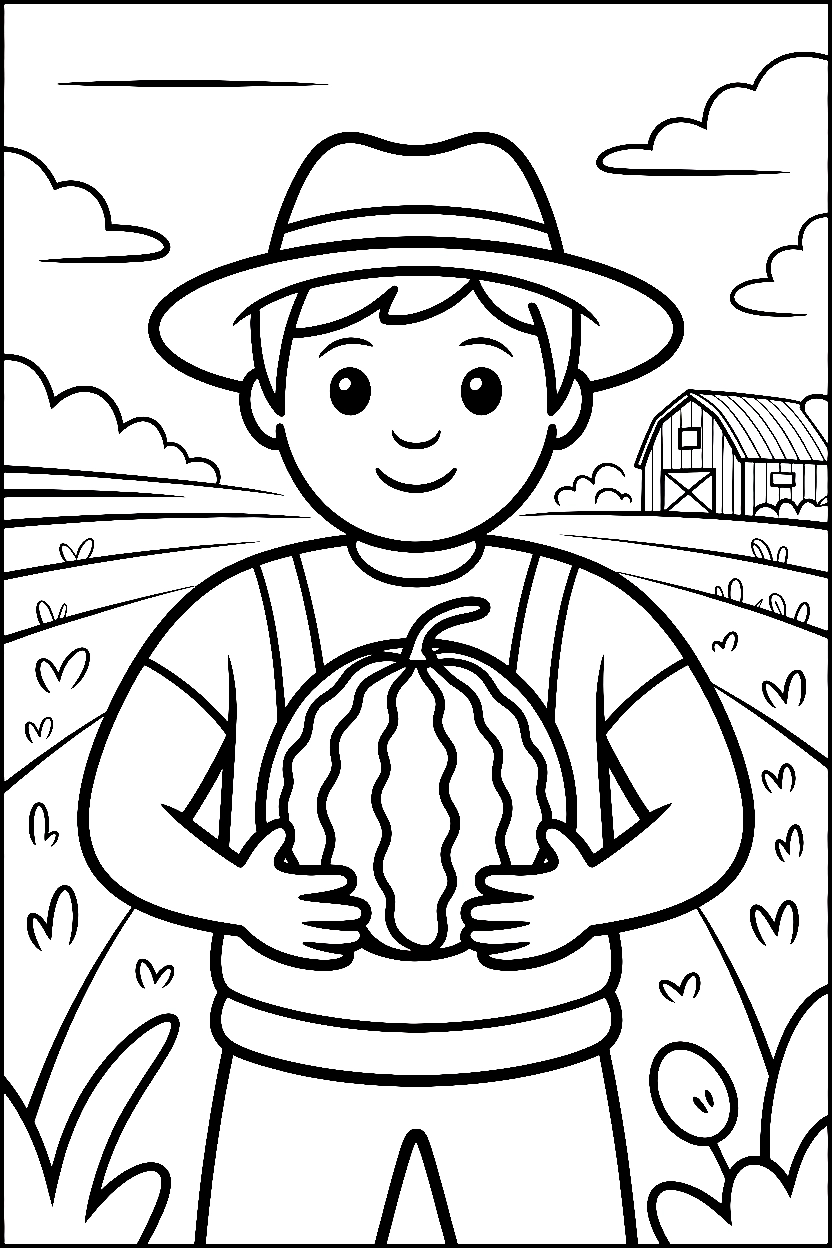
The shapes repeat in gentle variations. Round becomes oval. Whole becomes halved. Thick rind meets thin flesh in every composition. Some melons rest against garden fences. Others balance on kitchen counters. The scenes stay simple and uncluttered.
Coloring supports fine motor skills.
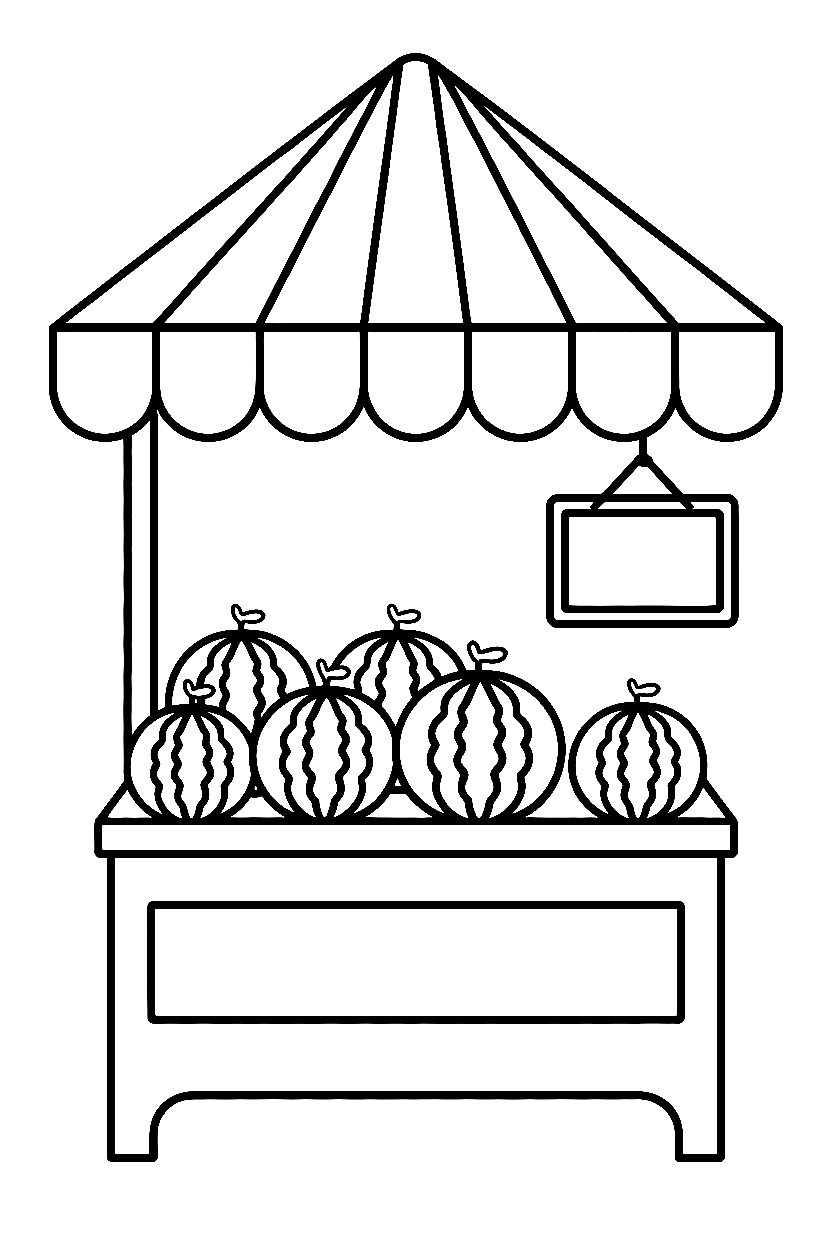
A printable activity sheet might show a watermelon stacked in a fruit stand alongside other produce. Wooden crates frame the arrangement. Price signs hang overhead on strings.
The melon occupies the bottom crate, positioned near the corner where light would naturally fall. Children can trace the rind’s curve or fill the background with careful strokes.
Another line art scene depicts a watermelon patch mid-harvest. Vines trail across the ground in loose spirals. Several melons scatter across the field.
A basket sits half-full in the foreground. The horizon stays flat and open. This kind of image lets young artists practice staying within boundaries while building hand strength.
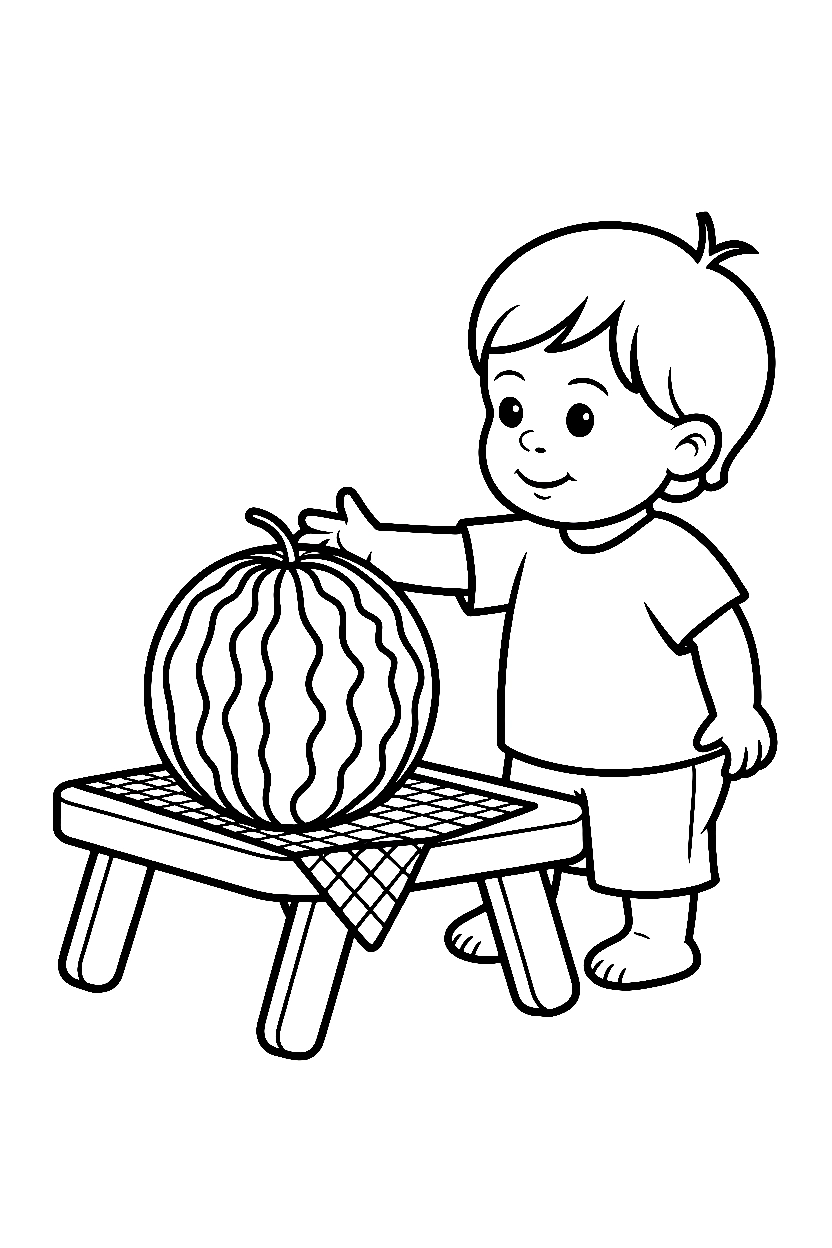
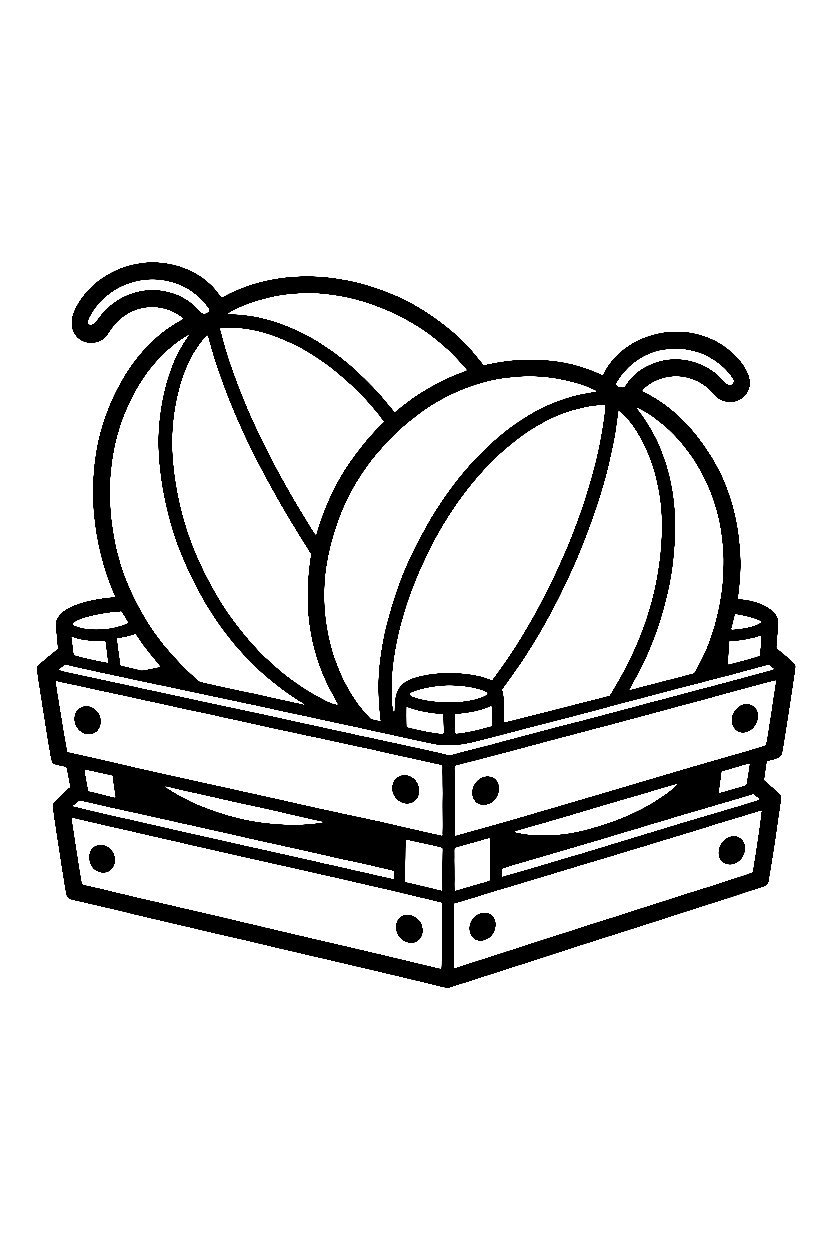
The drawings avoid crowded details. Clean lines define each form. Negative space balances the composition. A child working through these pages learns to control pressure and direction. The repetition builds confidence. Small hands grow steadier with each completed sheet.
Some illustrations place the watermelon in narrative contexts. A picnic scene includes a checkered blanket spread under a tree. The melon sits sliced on a plate.
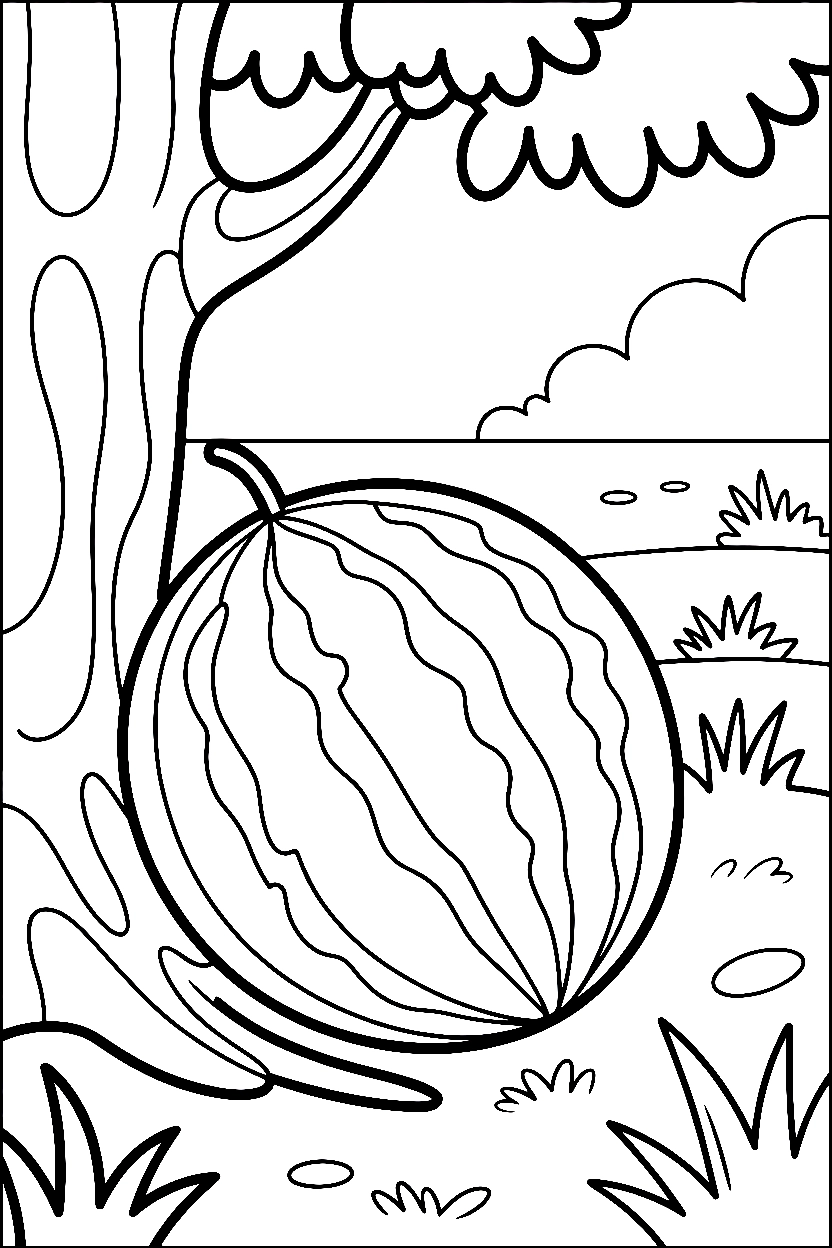
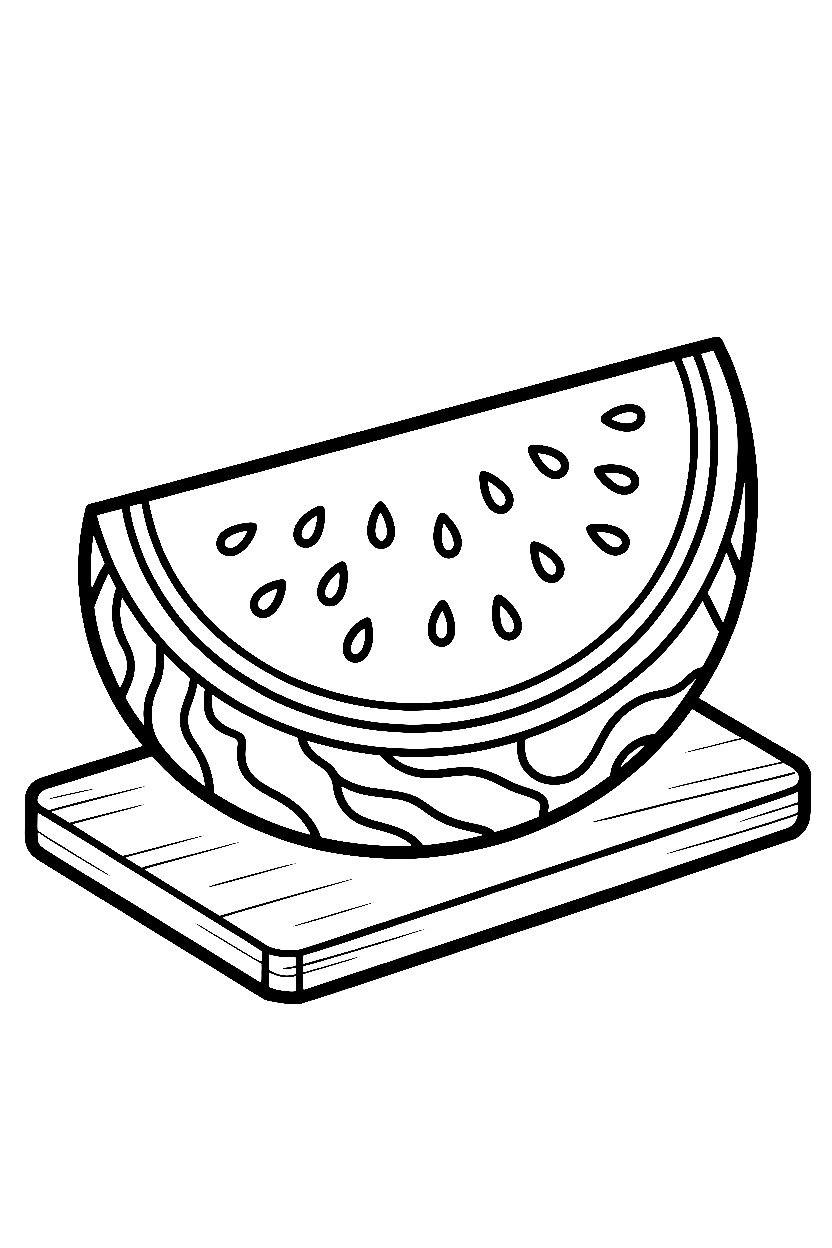
A glass of lemonade stands nearby. Simple clouds float above. These printable Watermelon Coloring Pages offer enough detail to sustain interest without overwhelming younger children.
Creative Tip: Start with the rind’s outer edge and work inward. Let the darker strokes define the seeds.
Fun Fact: Watermelons grow on vines that can spread across an entire garden bed.
How to Print Your Pages
Scroll down to browse the collection. Select the image that appeals most. Click the orange “PRINT” button below your chosen design. Start coloring right away.
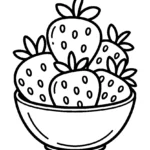
You might also like: Strawberry Coloring Pages